
Bowel preparation with Pleinvue
Information about your colonoscopy (bowel examination)
at the NKI Center for Early Diagnostics

The NKI Center for Early Diagnostics uses the
Patient Journey app to provide personalised information about your colonoscopy procedure (www.avlcvv.nl/app).
This leaflet is for people who cannot use the app. It contains information about your procedure. Use a quiet moment to review all the information.
If it differs from what you were told by your healthcare provider, you should follow your healthcare provider’s instructions or information.
Do you have any questions or concerns? If so, please contact us. Our phone number can be found on the last page of this leaflet.
Your procedure
The procedure starts with you lying on your left side. The doctor will slowly insert a flexible tube, a colonoscope, into your anus. During the procedure, you may be asked to change position to assist the passage of the colonoscope. Your bowel will also be inflated with air to make it easier to see. This can cause some discomfort. The procedure can be painful if you’ve had extensive abdominal surgery or radiation therapy to part of your abdomen. As discussed at the clinic, you can request twilight sedation to make it less painful. The procedure will take about 30 minutes.
Biopsy
Sometimes the doctor will use a special tool to remove bits of tissue for further evaluation by a pathologist under a microscope. This is called a biopsy. A biopsy doesn’t hurt. The cuts from the biopsy won’t take long to heal. You may find traces of blood in your stool afterwards, however. The doctor or nurse on the ward will tell you the results of the procedure so far. The results of the biopsy will take five to ten working days to receive. We will inform you of these results by phone.
Sedation
You may be given a sedative (light or conscious sedation) for your procedure. The sedative will be injected into a blood vessel in your hand or arm using an IV. This is not the same as general anaesthesia. During the procedure, your heart rate and blood oxygen levels are monitored continuously. If necessary, you will receive supplementary oxygen through a tube in your nose.
The days before your procedure
Information for your doctor
For some procedures and treatments, it can be important for the doctor to know certain information about you. Notify your doctor in advance if any of the following are applicable:
- You are allergic to certain medications or sedatives (please specify)
- You take NSAIDs for pain relief such as aspirin, Brufen (ibuprofen) or Voltaren (diclofenac)
- You are on anticoagulants such as Sintromitis (acenocoumarol), Marcoumar (phenprocoumon), Plavix (clopidogrel), Persantin (dipyridamol), Dabigatran, Rivaroxaban, Apixaban or Ascal (acetylsalicylic acid)
- You take diabetes medication
- You have cardiac arrhythmias
- You have heart disease or are taking heart medication
- You had this procedure before, but your colon wasn’t clean enough (possibly necessitating more extensive preparation)
- You have a bowel stoma
- Your kidney function is impaired
- You take iron pills (if so, stop taking iron a week before the procedure)
- You are receiving chemotherapy
Bowel preparation with Pleinvue
Laxatives and no eating or drinking
For your procedure to go well, your bowel must be clean and free of any stool. Otherwise the doctor will not be able to assess it properly. Thay is why it is important to prepare well for your colonoscopy.
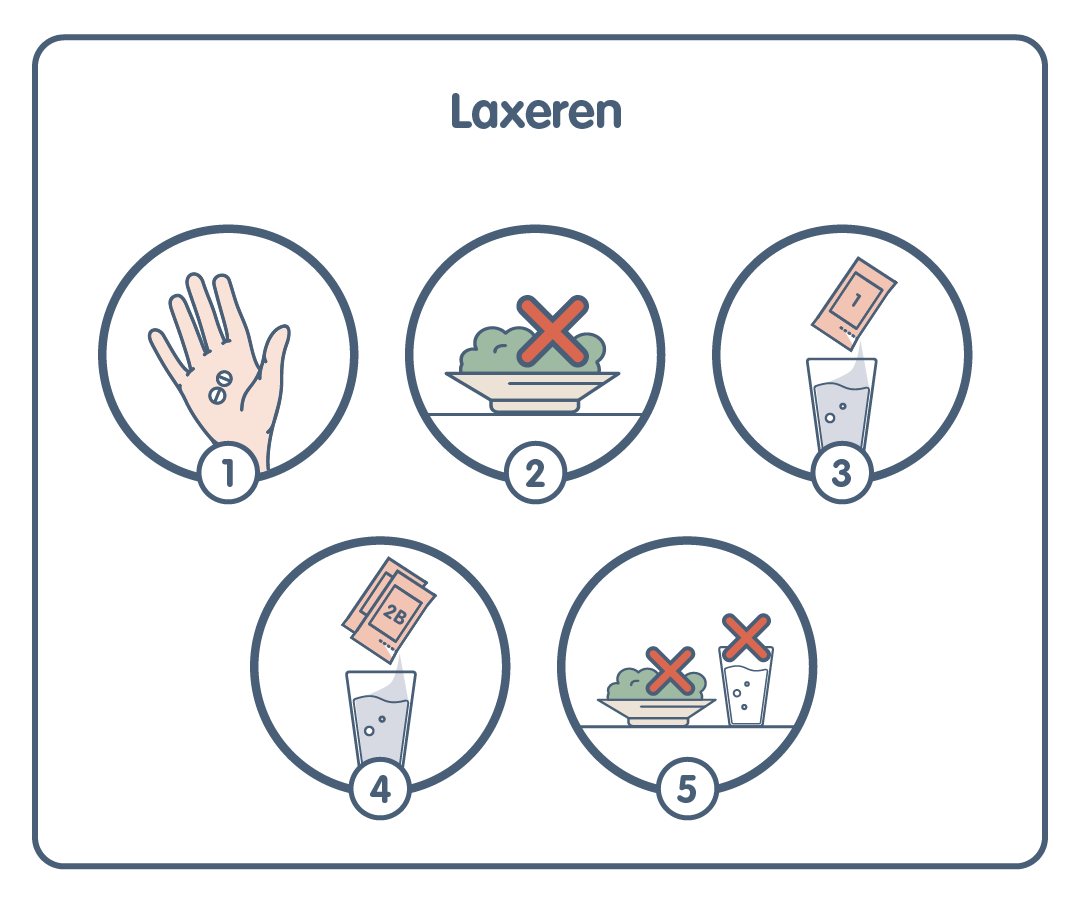
The day before your colonoscopy
- Bisacodyl tablets
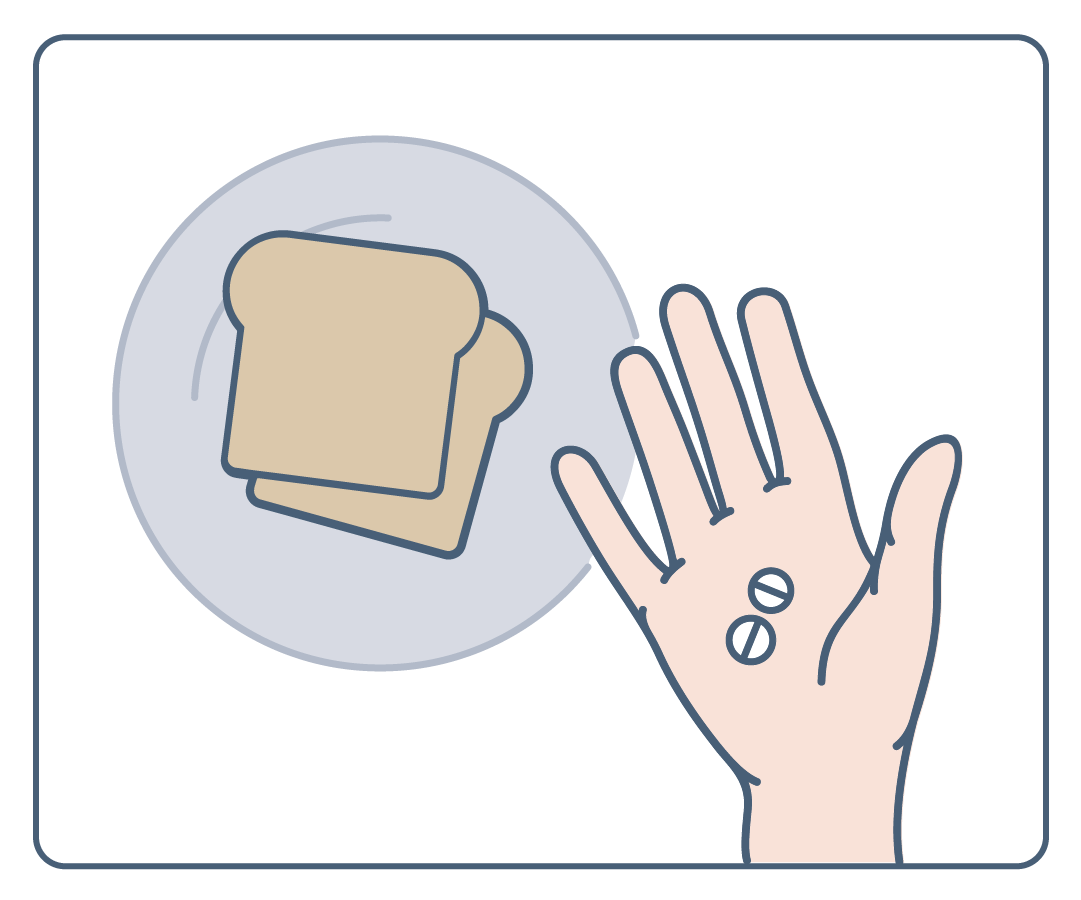
On the morning of the day before your colonoscopy and before you have had anything to eat or drink, take two bisacodyl tablets, chasing them down with a glass of water. For some people, the laxative effect is immediate.
After that, you may have only low-fibre foods for breakfast and lunch. Page 9 contains more information about low-fibre foods.
Day: Time:
- No more eating
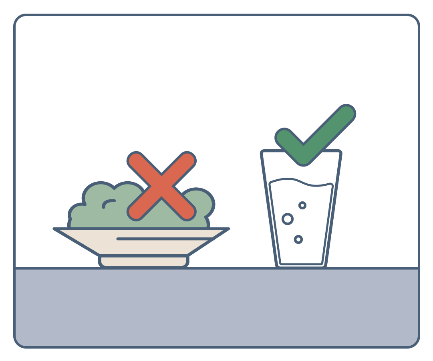
After 16:00 the day before your colonoscopy, you are no longer allowed to eat any solids.
Day: Time:
See page 10 for more information on what you can and cannot drink.
- Pleinvue (laxative) Dose 1
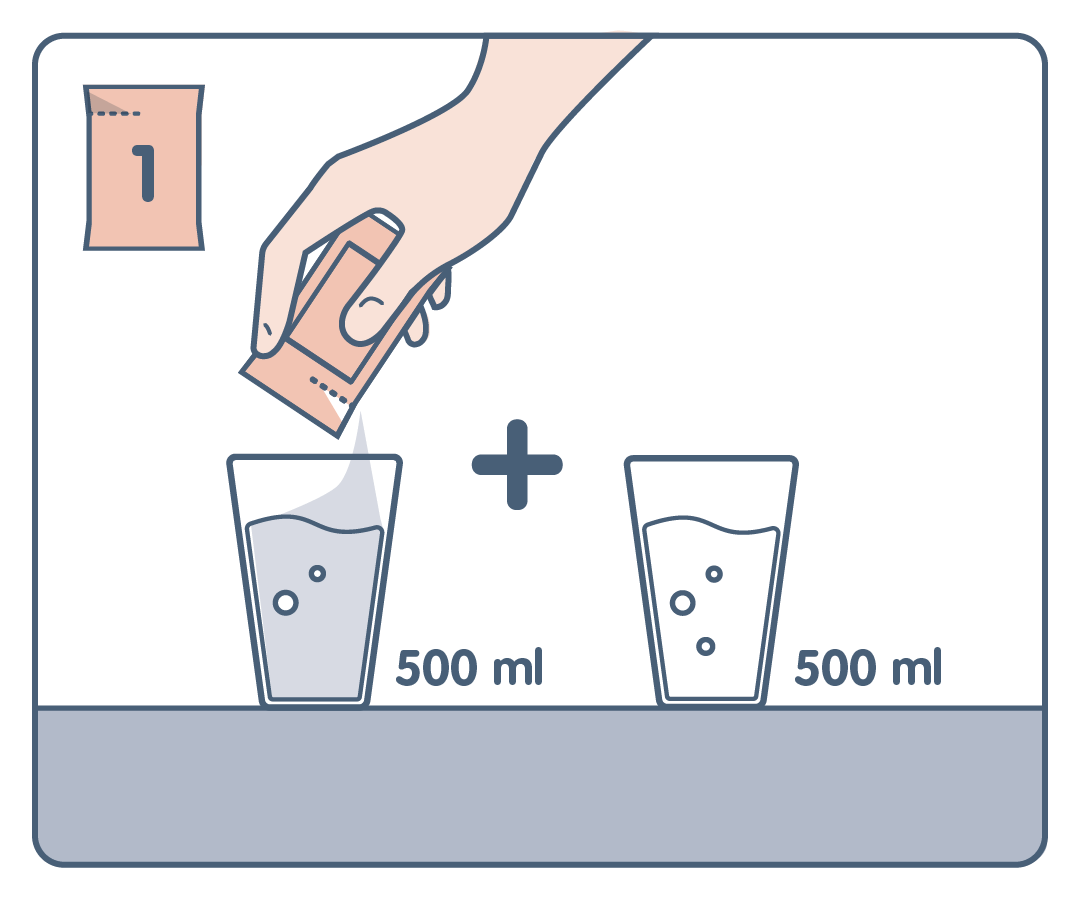
Start taking the first dose of laxative at 18:00 the day before your colonoscopy. Dissolve Dose 1 in water and drink it all within the hour. From now on, your stool will be more liquid and you will need to use the toilet often.
Be sure to follow the instructions carefully to avoid having to repeat the colonoscopy procedure.
Day: Time:
Taking Pleinvue Dose 1
- Open the carton and remove the Pleinvue Dose 1 sachet.
- Pour the contents of the Dose 1 sachet into a measuring container that holds at least 500 ml.
- Add 500 ml of water.
- Stir until all the powder has dissolved. This can take up to 8 minutes.
- Drink the entire 500 ml of Pleinvue Dose 1 solution within 60 minutes.
- This is best achieved by drinking a full glass every 10 or 15 minutes until you have finished it all.
- Drink at least another 500 ml of clear liquid throughout the evening.
After drinking the solution, your stool will become watery and you will need to use the toilet often. It may be that you will also need to go during the night, but many people can still get some sleep. Queasiness is also possible.
Tips:
- Drink Pleinvue slowly, taking your time. If you feel queasy, take a short break and wait for the feeling to die down before continuing.
- Drink Pleinvue in small sips.
- Drink Pleinvue cold to improve the taste.
- Use a straw to drink Pleinvue from a glass.
- Chew sorbitol-free gum between drinking the Pleinvue.
- Try to keep moving around as much as possible during your prep while making sure to stay near a toilet.
On the day of your colonoscopy
- Pleinvue (laxative) Dose 2
Day: Time:
Four hours before your colonoscopy, you must take the second dose of laxative. 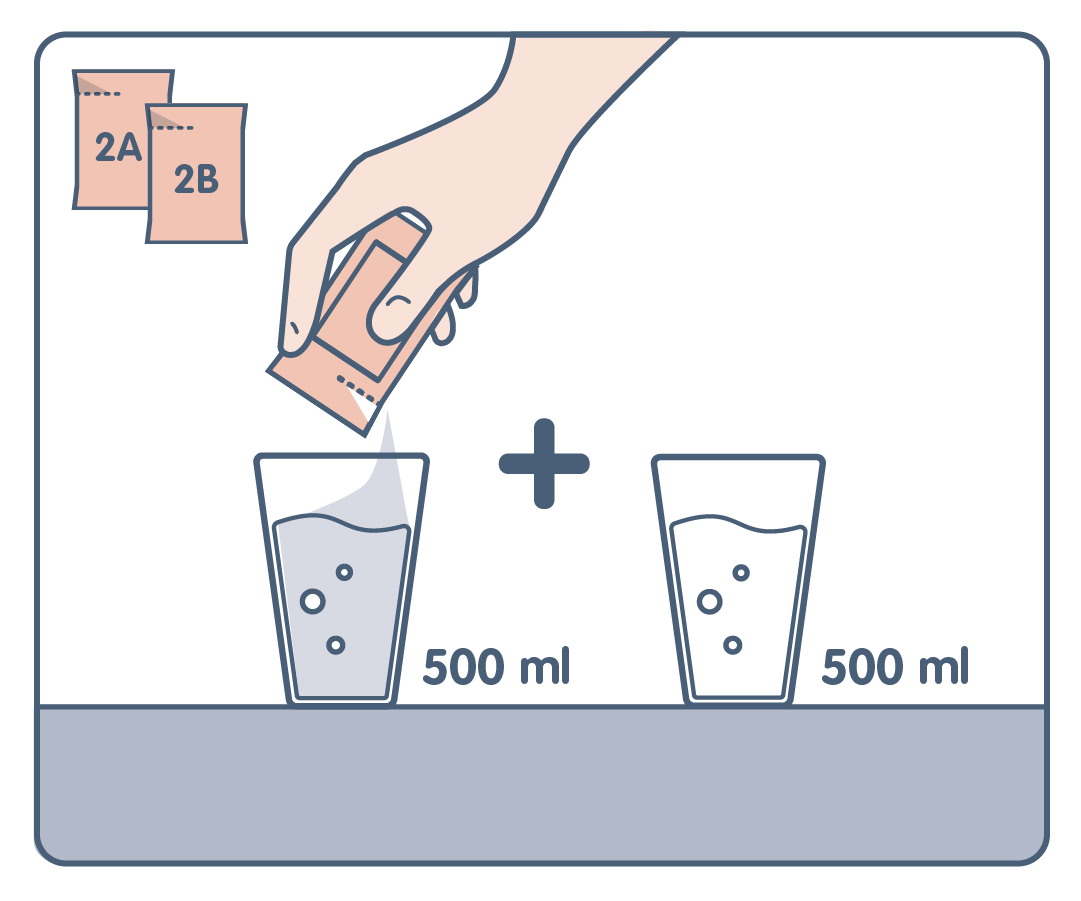 Dissolve the second dose of laxative in water and drink it all within the hour.
Taking Pleinvue Dose 2
- Remove the Pleinvue Dose 2A and 2B sachets from the carton.
- Pour the contents of the Dose 2A and 2B sachets into a measuring container that can hold at least 500 ml.
- Add 500 ml of water.
- Stir until all the powder has dissolved. This can take up to 8 minutes.
- Drink the entire 500 ml of Pleinvue Dose 2 solution within 60 minutes.
- This is best achieved by drinking a full glass every 10 or 15 minutes until you have finished it all.
- Follow this by drinking at least another 500 ml of clear liquid until two hours before your colonoscopy.
Tips
- Have a cup of hot tea before starting on this
second dose.
- Drink Pleinvue slowly, taking your time. If you feel queasy, take a short break and wait for the feeling to die down before continuing.
- Drink Pleinvue in small sips.
- Drink Pleinvue cold to improve the taste.
- Use a straw to drink Pleinvue from a glass.
- Chew sorbitol-free gum between drinking the Pleinvue.
- Try to keep moving around as much as possible during your prep while making sure to stay near a toilet.
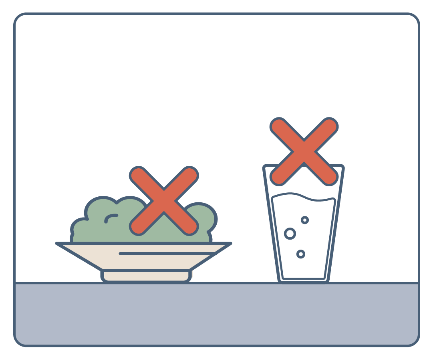 Nothing more to drink
Starting two hours before your colonoscopy, you are no longer allowed to drink anything.
Day: Time:
Additional instructions (if needed):
Information about eating and drinking
Low-fibre diet: up to 16:00 the day before your colonoscopy
To ensure that everything is fully digested before the procedure, it is important to eat only foods low in fibre starting on the morning of the day before your colonoscopy.
What you can eat up to 16:00 the day before your colonoscopy:
- Crispbread, white or light brown bread without seeds or nuts
with margarine or butter, processed meats, cheese, a boiled egg, chocolate sprinkles or spread, honey, syrup, or seedless jam
- Soft, ripe fresh or canned fruit with no skin, seeds or fibres
- Applesauce and fruit purees
- Soup with meatballs and noodles
- Potatoes, white rice, pasta, lightly roasted lean meat, fish
or chicken
- Cauliflower, broccoli or carrots
- Custard, pudding, quark or yoghurt
You cannot eat:
- Seeded or wholemeal bread
- Wholewheat or multigrain pasta, brown rice
- Asparagus, celery, sauerkraut, green beans, runner beans,
leeks, peas, pulses, bean sprouts, sweetcorn, mushrooms, tomatoes, onions, garlic, spinach, endive, peppers, raw vegetables
- Oranges, grapefruit, manderins, kiwi fruit, blackberries, grapes strawberries, dried fruit
- Nuts and peanuts
Drinking: from 16:00 the day before to two hours before your colonoscopy
You can drink:
- Water
- Clear broth
- Strained fruit juice without pulp
- Clear, non-alcoholic drinks such as squash (no
red drinks) or sports drinks
- Coffee and tea without milk
- If you need sugar, ice lollies (no red lollies)
or dextrose tablets are permitted.
You cannot drink:
- Milk and dairy products
- Alcoholic beverages
- Red drinks
- Carbonated drinks
Conscious sedation (light sedative)
You can choose to be lightly sedated during your colonoscopy.
This type of sedation is also known as conscious sedation. It will make the procedure more comfortable for you.
What is conscious sedation?
With conscious sedation (light sedative), you are given drugs to make you relaxed and calm (Midazolam), sometimes with pain relief as well (Fentanyl). You receive these drugs by IV before your procedure. Most people will then fall into a (light) doze. Others do not fall asleep, but do feel very relaxed. Your anxiety and awareness are lessened. We cannot predict your response to the sedative.
Conscious sedation is not the same as general anaesthesia. Generally, you will remember nothing or very little of your procedure due to the sedation.
Advantages:
- One advantage of conscious sedation is that you are still able to breathe without assistance, unlike under anaesthesia.
- You remain responsive and the doctors and nurses can talk to you during your procedure.
- Often, you will have no memory of what happened afterwards.
Disadvantages:
- Midazolam causes shallower breathing. A tube may need to be inserted in your nose to deliver supplemental oxygen. If the oxygen levels in your blood become too low, it may be necessary to reverse the effects of the sedative. In that case, you will receive additional medication (flumazenil).
- Midazolam can also lower your blood pressure and heart rate. If your blood pressure drops, additional fluid may be administered by IV.
- You could be allergic or oversensitive to the drugs used. If you know this is a risk, be sure to tell us.
- Alternatively, the drugs may be less effective than expected. Regular use of sleeping pills, antidepressants or alcohol can reduce the sedative effect.
- The drugs can remove inhibitions, causing you to say or do things you never would otherwise.
- Rarely, twilight sedation can cause respiratory depression or cardiovascular issues. This occurs in three out of every thousand patients on average. Such issues are generally easily resolved using medication or supplementary oxygen.
- You cannot drive or otherwise take part in traffic for 24 hours after being sedated. Make sure you have someone to take you home.
The procedure under conscious sedation
You will be instructed to lie down on an examination table in the examination room. Wear comfortable clothing, such as a sleeveless top and joggers.
The nurse will prepare you for sedation:
- You are connected to monitoring equipment.
- Stickers are applied to your chest to monitor your heart rate.
- A device is attached to your finger to measure the amount of oxygen in your blood.
- Your blood pressure is measured.
- An IV needle is inserted into your hand or arm.
- If necessary, a sponge is placed in your nose to provide supplemental oxygen.
Then the doctor or nurse administers the sedative. The nurse will monitor you closely throughout your procedure.
After your procedure
After your procedure you will be moved to the recovery room, where specialised nurses will keep an eye on you. If all is well, you will be allowed to go home after an hour or so. You will need to have someone there to take you home. You cannot drive yourself.
Recovery
It is possible that you will NOT feel well for a while after your procedure. A procedure and hospital stay can be both mentally and physically draining. It is perfectly normal to need some time to rest and recover.
Your questions
Do you have any questions? Feel free to ask the doctor or nurse on the day of your procedure.
Frequently asked questions
What can I do if the skin around my anus is itchy or painful?
Going to the toilet so often can cause the area around your anus to become itchy or painful. To soothe your skin, try applying vaseline or nappy rash cream.
My stool looks different than I’d expected, now what?
Your stool should eventually become a lightly coloured, watery liquid. Does your stool have an orange tinge or is it not entirely clear? In that case, it is important to drink even more clear liquids up to two hours before your procedure.
What is or isn’t OK for me to eat or drink?
See the section with “Information about eating and drinking”. In case of doubt, you can call us at +31 20 512 4343.
Can I leave the house after taking the laxative?
We advise staying near a toilet once you’ve taken the laxative. The urge to go to the toilet can be very abrupt.
Your bowel will start cramping one to six hours after taking the bisacodyl tablets. As soon as you drink the first sachet of laxative, your stool will become thin and diarrhoea-like. You will feel the urge to have a bowel movement quite suddenly and frequently. This will continue for approximately three hours.
By the morning of your colonoscopy, your bowel will be mostly empty. You should be able to make the trip to the NKI Center for Early Diagnostics without any problems. You can also bring a clean pair of underwear or use a sanitary napkin just in case.
Can I eat or drink whatever I want once my procedure is done?
Usually, you can eat and drink again as soon as the procedure is done. If you cannot eat or drink yet, we will tell you so after your procedure.
What risks and complications should I be aware of?
Complaints immediately after your colonoscopy
You may lose a bit of blood after your colonoscopy. This is normal and not at all dangerous. If you lose enough blood to fill a coffee cup, you are in pain or feverish, call the NKI Center for Early Diagnostics at +31 20 512 4343.
Colonoscopy risks
We will do everything we can to ensure that your colonoscopy proceeds safely and without complications. Despite this, the following problems may arise during your colonoscopy:
- You start bleeding after a polyp’s removal. The doctor can usually stop such bleeding during the colonoscopy.
- The procedure causes a hole or tear in the wall of your bowel. This is called a bowel perforation. If stool leaks into your abdomen, it can cause peritonitis, an inflammation of the inner abdominal wall lining.
The consequences can be very bad if not treated in time. Bowel perforations are rare, only occurring in three out of every 10,000 colonoscopies. Are you experiencing severe abdominal pain after your colonoscopy and are you feverish? Contact us immediately.
Practical information
Contact
Telephone number: +31 20 512 4343.
About us
The NKI Center for
Early Diagnostics is an initiative of the Netherlands Cancer Institute.
The Center uses a combination of innovation and examination to provide swift assurance in case of risk factors or symptoms that could indicate cancer.
Early detection and diagnosis of tumours increases the range of treatment options, often allowing for treatment that is less invasive or costly.
Waiting times at the Center are short to allow us to provide assurance quickly.
Information online
www.avl.nl/en/mijnavl/
www.avl.nl/en/preparing-for-your-appointment/telephone-consultation-hours/
www.avl.nl/en/your-visit-to-the-nki/parking/
www.avl.nl/en/your-visit-to-the-nki/facilities-and-services/hospital/
Visiting address
NKI Center for
Early Diagnostics
Plesmanlaan 121
1066 CX Amsterdam
Postal address
NKI Center for
Early Diagnostics
PO Box 90203
1006 BE Amsterdam
maart 2026
Praktische informatie
Contact
Ons algemene nummer is 020 512 9111. Onze telefonisten verbinden u graag door met de juiste afdeling.
Voor dringende zaken buiten kantooruren kunt u vragen naar het Weekend-, Avond- of Nachthoofd. Bel bij medische spoed altijd 112. Voor andere vragen verzoeken wij u te wachten tot de volgende werkdag.
Centrum Patiënteninformatie
Wilt u meer informatie omdat u of een naaste te maken heeft met kanker? Onze medewerkers denken graag met u mee. U kunt bellen of zonder afspraak binnenlopen.
Centrum voor Kwaliteit van Leven
Heeft u behoefte aan professionele steun tijdens en na uw behandeling? Dan kunt u een afspraak maken bij ons centrum via uw behandelaar.
Route & adres
U vindt meer praktische informatie over uw bezoek, de route & parkeren, onze bezoektijden en voorzieningen en diensten op onze website.